
Why Your Air Conditioner Freezes During Georgia Summers
It is the middle of July, the air is thick enough to cut with a knife, and we are officially in the thick of The Dog Days. You walk into your home expecting a blast of cool relief, but instead, the air coming from your vents feels warm and sticky. You check your thermostat, then head outside to inspect your unit, only to find the refrigerant lines encased in a solid block of ice. How does an air conditioner freeze when it is 95 degrees outside in Cumming?
It sounds like a complete paradox, but a frozen AC is actually one of the most common issues homeowners face during our brutal Southern summers. The sudden seasonal fluctuation from a mild spring to extreme summer heat puts an immense load on your system, often exposing underlying issues that went unnoticed during cooler months. When your system freezes, it is not just a minor inconvenience; it is a clear mechanical signal that something is fundamentally wrong with how your equipment is operating. Let's break down exactly why this happens, what causes the ice to form, and what you can do to get your home comfortable again.
The Most Common Culprit: Restricted Airflow
Your air conditioner needs a constant, steady flow of warm air from inside your house moving over its indoor evaporator coil to function correctly. This warm air prevents the cold refrigerant inside the coil from dropping below the freezing point. When airflow is restricted, the coil gets far too cold, and the natural condensation that forms on the metal instantly turns to ice.
What causes this restriction? More often than not, it is a dirty air filter. During our notorious Pollen Season, your filters work overtime trapping yellow dust, pet dander, and everyday household debris. If you aren't changing your filter regularly, it becomes a dense wall that blocks air from circulating. Proper ventilation is critical not just for your indoor air quality, but for the mechanical health of your entire system. Closed supply vents, blocked return grilles, or even dirty ductwork can also choke your system and lead to a frozen coil. We generally recommend checking your filter every 30 days during peak summer usage to ensure your system can breathe properly.
Low Refrigerant Levels and System Leaks
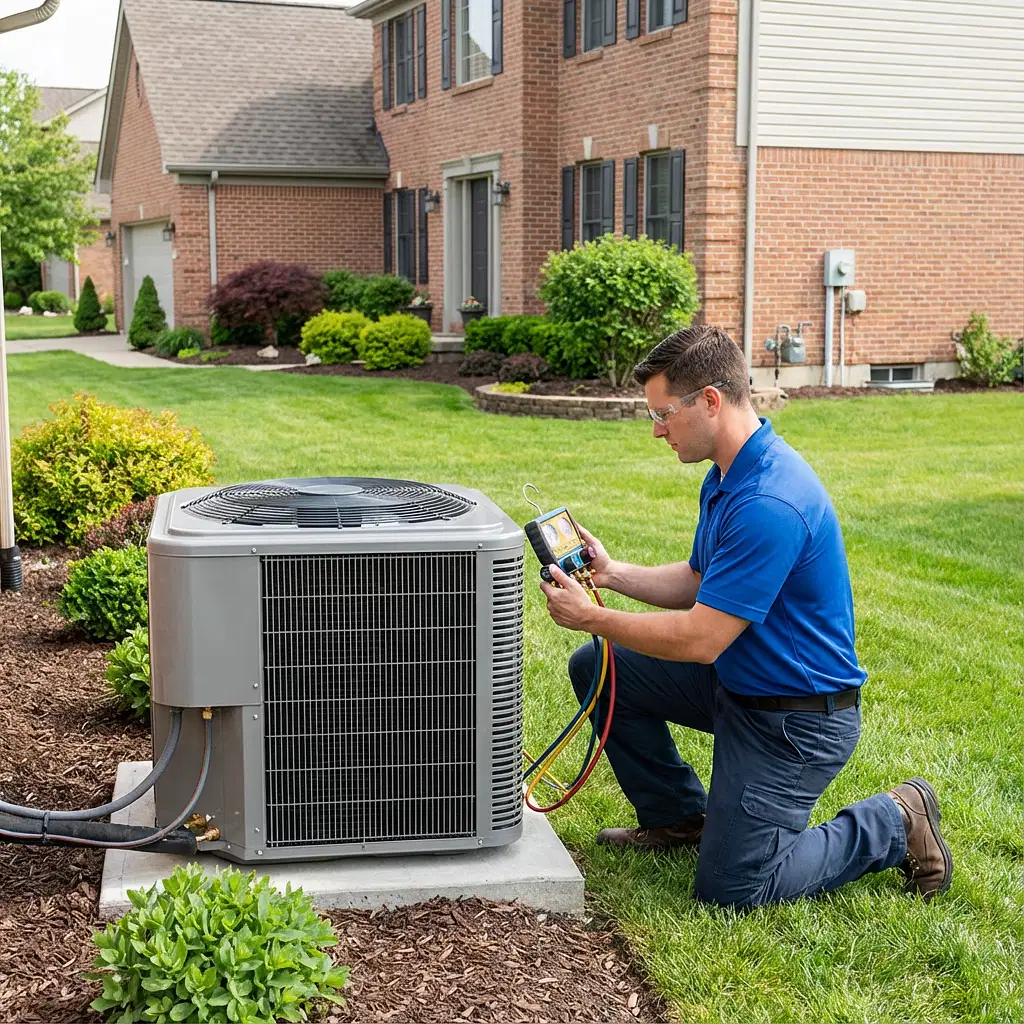
Another major reason ice forms on your AC unit is low refrigerant. Your system doesn't consume refrigerant like a car consumes gas; it circulates it in a closed, pressurized loop. If your levels are low, it means you have a leak somewhere in the line.
When refrigerant leaks out, the pressure inside the evaporator coil drops significantly. This drop in pressure causes the temperature of the remaining refrigerant to plummet below freezing. As the humid indoor air hits that super-cooled coil, it freezes on contact. Fixing this isn't as simple as just topping off the fluids. A certified technician needs to locate the leak, repair the copper line, and recharge the system to the manufacturer's exact specifications. With the ongoing industry transition away from older refrigerants like R-410A to new, more efficient standards, having a knowledgeable professional handle your heating and cooling maintenance is more important than ever. If you have an older system that is constantly leaking, this is often the point where homeowners ask if they should repair or replace their aging unit, as rising equipment and refrigerant costs can make constant repairs financially draining.
Battling Red Clay Humidity and Drainage Issues
Living in North Georgia means dealing with intense, heavy moisture. Our Red Clay Humidity doesn't just make the afternoon heat feel oppressive; it forces your air conditioner to pull gallons of water out of your indoor air every single day to keep you comfortable.
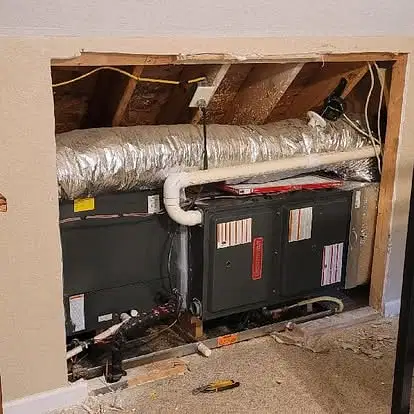
All that condensation drips off the evaporator coil and into a drain pan, where it flows outside through a PVC condensate drain line. However, algae, dirt, and mold love dark, damp environments and can easily clog this drain line over time. When the water has nowhere to go, it backs up into the pan. If the coil is already running slightly too cold due to minor airflow or refrigerant issues, that standing water will freeze, eventually encasing the entire lower portion of your unit in a block of ice. Managing this humidity is a crucial part of maintaining good indoor air quality and protecting your equipment from premature failure.
What to Do If Your AC Freezes
If you discover ice on your indoor or outdoor unit, your first instinct might be to grab a tool and chip it away. Please do not do this. The aluminum fins on your evaporator coil are incredibly delicate, and you can easily puncture a pressurized refrigerant line, turning a simple service call into a massive, costly system replacement.
Instead, follow these steps immediately:
First, turn your thermostat from the cool setting to off. Continuing to run a frozen system forces the compressor to work against a blocked line, which can permanently damage the compressor—the heart and most expensive component of your unit.
Second, turn the fan setting on your thermostat from auto to on. This forces warm indoor air to blow continuously over the frozen coil, helping it thaw much faster.
Finally, check your air filter. If it is completely caked in dust and debris, replace it immediately.
Once the ice has completely melted, which can take anywhere from a few hours to a full day depending on the severity of the freeze, you can try turning the AC back on. If it freezes again, or if the filter wasn't the issue to begin with, it is time to call in the professionals for proper HVAC repairs.
Keep Your Home Cool All Summer Long
Dealing with a frozen air conditioner during extreme summer demand spikes is incredibly frustrating, especially when you just want to relax in the AC after a long, hot day out on Lake Lanier. Preventative maintenance is the absolute best way to avoid these unexpected breakdowns. Regular tune-ups ensure your refrigerant levels are correct, your coils are clean, and your drainage lines are clear before the worst of the heat arrives.
At Town Creek Heating & Cooling, we understand that when your AC goes down, you need help fast. We pride ourselves on rapid response times, transparent upfront pricing, and doing the job right the first time so you don't have to worry about repeat breakdowns. If your system is struggling to keep up, blowing warm air, or you are dealing with a stubborn freeze-up, don't suffer through the heat. Contact us today to schedule a service call and let our experienced, certified technicians restore your home's comfort.